
Introduction
In a world increasingly defined by sustainability and circular economy goals, matarecycler emerges as a concept that symbolizes the future of intelligent recycling. The term represents a new generation of recycling innovation — a bridge between environmental awareness, digital technology, and industrial-scale efficiency.
The concept behind matarecycler extends beyond simple waste management. It reflects how modern systems, data analytics, and eco-driven technologies are reshaping how industries handle everything from electronic waste to plastics, metals, and urban recyclables. This article explores how matarecycler is redefining recycling, why it matters in today’s sustainability context, and how its principles align with global green transformation.
Understanding matarecycler: The Core Idea
The word matarecycler stands for “Material Recycler”, representing the evolving ecosystem of modern waste recovery. In traditional recycling, materials are collected and processed with limited tracking or efficiency. The new generation of matarecycler systems introduces data integration, AI-based sorting, and smart resource management to create closed-loop cycles where waste becomes a valuable raw material again.
At its core, matarecycler focuses on three pillars:
- Resource Efficiency: Reducing material loss during recycling.
- Smart Processing: Using digital and robotic technologies for sorting and purity.
- Sustainability: Supporting climate targets and zero-waste goals.
The Evolution of Recycling Toward matarecycler Systems
The traditional recycling model relied heavily on manual labor and limited infrastructure. However, as global consumption rose and e-waste became one of the fastest-growing waste streams, recycling required modernization.
Phase 1: Manual Recycling
Initially, recycling was local and labor-intensive, often limited to basic material separation.
Phase 2: Mechanical Processing
Industrialization brought conveyor-based sorting and shredding machines that handled higher volumes but lacked precision.
Phase 3: Smart Recycling — The matarecycler Era
Now, with machine learning, robotics, and real-time tracking, recycling facilities are becoming matarecycler systems — autonomous, data-driven plants capable of identifying and classifying materials with 99% accuracy.
This transformation marks the transition from waste management to resource regeneration.
matarecycler in the Global Sustainability Context
Supporting the Circular Economy
Circular economy principles advocate designing products for reuse, repair, and recycling. matarecycler aligns perfectly with this vision by turning end-of-life products into new material streams.
Reducing Carbon Emissions
Modern recycling reduces the need for raw material extraction. By integrating energy-efficient technologies, matarecycler systems help lower emissions and energy use, aligning with international climate frameworks such as the Paris Agreement and UN Sustainable Development Goals (SDGs).
Driving Green Innovation
The adoption of matarecycler models encourages innovation in product design, supply chain logistics, and waste-to-resource transitions. Industries adopting this model can trace materials, measure carbon impact, and achieve full environmental transparency.
How matarecycler Technology Works
1. Collection and Identification
Smart bins or sensors detect and categorize waste at the source using barcodes, chemical sensors, or AI vision.
2. Sorting and Separation
Automated arms and optical sensors separate plastics, metals, glass, and e-waste components with high precision.
3. Data Tracking
Every material flow is recorded, analyzed, and shared with manufacturers to improve recycling loops.
4. Reprocessing
Materials are processed into reusable forms, often achieving higher purity than traditional methods.
5. Redistribution
Recycled materials are redistributed back into the industrial supply chain, completing the loop.
This entire system transforms a landfill-bound waste stream into a traceable and measurable resource cycle.
The Role of AI and Robotics in matarecycler Systems
Artificial intelligence and robotics are the foundation of the matarecycler revolution. Using deep learning algorithms, machines can identify the chemical composition, color, and structure of materials — making sorting faster, cleaner, and safer.
AI Integration
- Identifies contamination in recyclables.
- Predicts material recovery rates.
- Suggests optimization paths for maximum yield.
Robotic Automation
- Enhances efficiency in large-scale facilities.
- Reduces labor dependency.
- Prevents hazardous exposure for human workers.
Together, these technologies form a backbone that allows matarecycler operations to achieve precision recycling — an approach that ensures no valuable material is wasted.
matarecycler and E-Waste Management
One of the most critical applications of matarecycler technology lies in electronic waste recycling. With millions of tons of discarded electronics generated yearly, conventional systems struggle to extract valuable components like copper, gold, and rare earth metals.
matarecycler-driven facilities use microwave-assisted pyrolysis, chemical recovery, and AI-based circuit sorting to recover these metals efficiently. This not only saves resources but also reduces environmental contamination from toxic components.
Economic Benefits of matarecycler Systems
1. Reducing Raw Material Costs
Companies using matarecycler methods can reuse materials instead of purchasing new raw resources.
2. Job Creation
Automation requires skilled operators, engineers, and data analysts, creating new opportunities in green technology sectors.
3. Market Competitiveness
Organizations that adopt sustainable recycling gain brand credibility, government incentives, and long-term cost stability.
matarecycler and Environmental Policy
Governments around the world are encouraging recycling modernization through tax incentives, green funding, and circular economy regulations. matarecycler systems directly support these initiatives by providing measurable and verifiable recycling outputs.
Examples of Alignment
- European Green Deal: Encourages digitalized recycling tracking.
- Extended Producer Responsibility (EPR): Requires manufacturers to ensure end-of-life product recovery — an area where matarecycler can automate compliance.
- UN SDG 12 (Responsible Consumption and Production): Directly tied to matarecycler principles.
Case Study: How matarecycler Changes Industrial Recycling
Imagine a smart recycling facility where all incoming materials are instantly scanned, identified, and directed to their appropriate recovery lines. Data is logged automatically, predicting future waste trends and optimizing collection routes.
This matarecycler model could process thousands of tons of material per day with minimal energy waste — turning cities into resource hubs instead of landfill generators.
Challenges and Future Opportunities
Challenges
- High initial setup cost for automation and AI integration.
- Limited awareness among developing markets.
- Need for global data standardization.
Opportunities
- Integration with blockchain for traceable recycling credits.
- Partnerships with electric vehicle and electronics industries.
- Potential carbon trading benefits from documented resource recovery.
The Future Vision of matarecycler
By 2035, matarecycler systems are expected to become standard in most developed economies. With AI-powered sustainability and data-driven waste recovery, the concept could redefine industrial ecology.
Emerging economies will also benefit, as modular matarecycler units can operate even in small-scale urban centers, enabling local recycling with global environmental benefits.
Why matarecycler Matters for the Planet
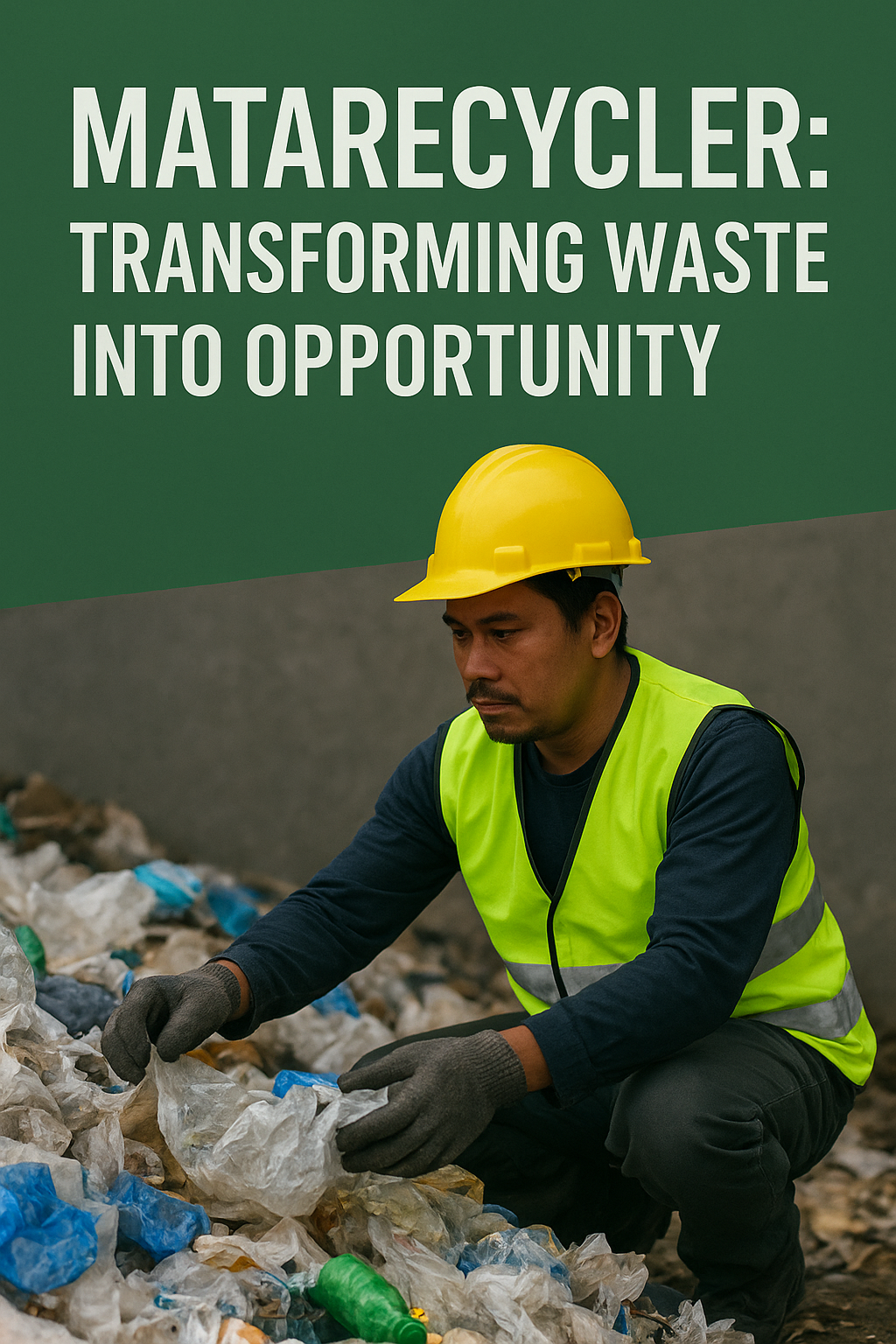
By 2050, global waste generation expected to jump by 70%, driven by urbanization and population growth. Without systems like matarecycler, humanity faces mounting environmental, economic, and social crises. By transforming waste into opportunity, matarecycler contributes directly to climate mitigation, energy savings, and material conservation.
This isn’t just about technology — it’s about a new mindset: waste is not the end of a product’s life; it’s the beginning of a new cycle.
Conclusion
matarecycler stands as a vision for the future — where smart technologies, environmental responsibility, and industrial innovation come together. It represents the shift from linear consumption to a circular, intelligent, and sustainable world.
As industries and cities embrace matarecycler principles, recycling will no longer be a reactive process. Instead, it will become an integral part of design, production, and daily living — ensuring that every discarded object finds a new purpose in a cleaner, greener world.