
Introduction
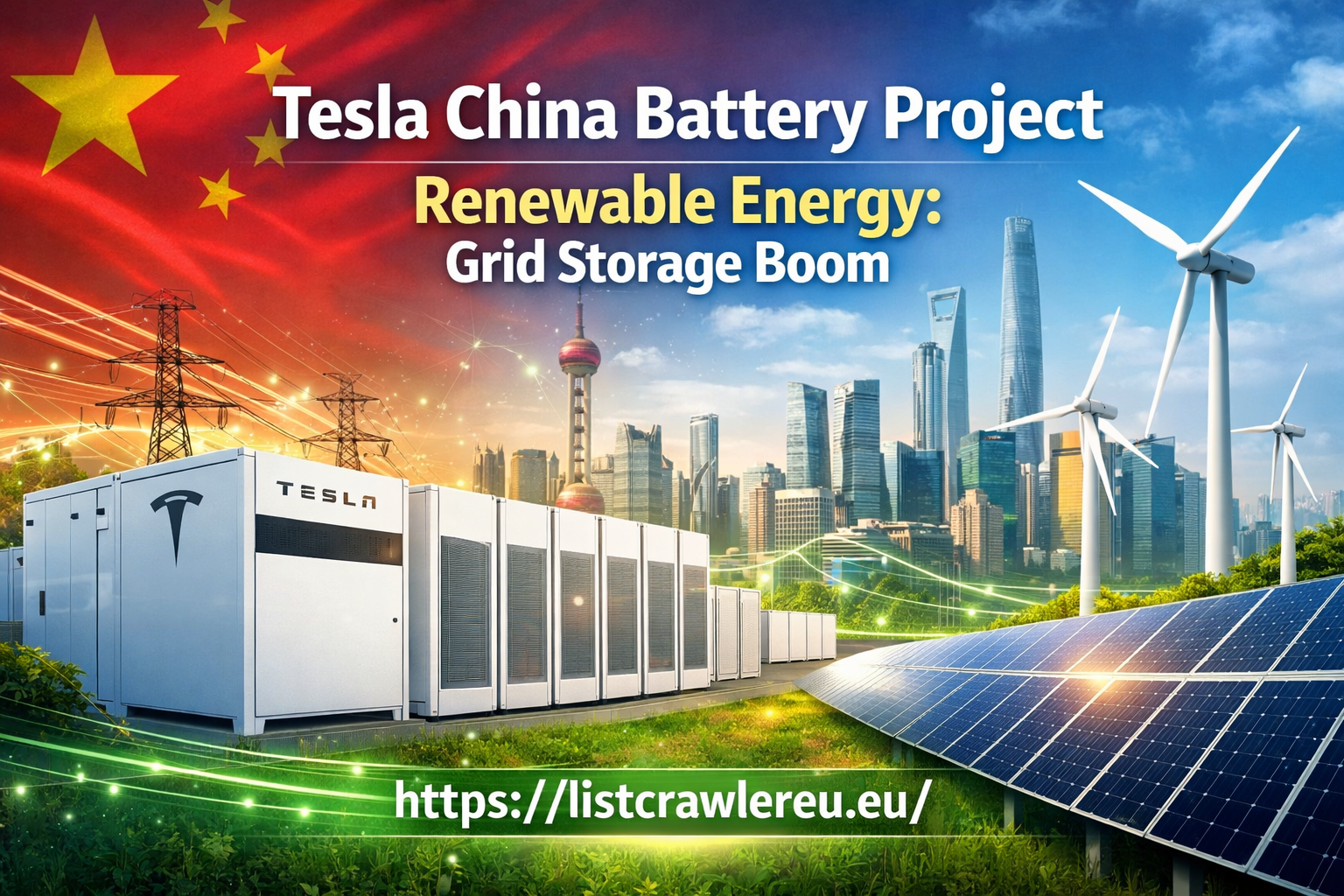
The renewable energy sector is rapidly transforming global electricity systems, with large-scale battery storage at the core of this revolution. Among the most high-profile developments of 2025 is the Tesla China Battery Project Renewable Energy: Grid Storage Boom — a strategic initiative that positions Tesla not just as an electric vehicle leader, but a major energy storage powerhouse in the world’s largest renewable energy market.
In June 2025, Tesla signed a landmark agreement with the Shanghai local government and key industrial partners to build its first grid-scale battery energy storage station in China, valued at approximately 4 billion yuan (about $557 million USD). This project, centered on Tesla’s advanced Megapack technology, is poised to make a significant impact on China’s clean energy transition and power grid modernization. Global Times+1
This article provides an in-depth look at the project’s background, technological components, strategic importance, market context, and long-term implications for both Tesla and China’s energy sector.
What Is the Tesla China Battery Project Renewable Energy Initiative?
The Tesla China Battery Project Renewable Energy refers to Tesla’s strategic effort to deploy large-scale battery energy storage systems (BESS) in China — with a specific focus on utility-grade grid applications. The project’s centerpiece is a massive battery station in Shanghai’s Lin-gang area, designed to balance supply and demand on the electric grid by storing renewable energy and supplying power during peak demand.
Unlike mobility-focused batteries used in EVs, these grid storage assets provide essential services such as:
- Peak shaving: Reducing the load on power plants during high demand hours.
- Frequency regulation: Stabilizing grid operations amid fluctuating input from solar and wind sources.
- Capacity trading: Allowing operators to buy and sell stored power in energy markets.
Tesla’s grid-scale battery project is a first of its kind in mainland China, marking the company’s entry into a rapidly growing segment of energy infrastructure that supports renewable power generation.
Background: Why China Needs Grid-Scale Energy Storage
China leads global renewable energy deployment. With ambitious targets for carbon neutrality and clean energy, the country has been adding wind, solar, and battery capacity at unprecedented rates.
However, renewable sources are intermittent — solar panels only generate power when the sun is shining, and wind turbines only produce when wind conditions are favorable. This variability creates challenges for grid operators, making large-scale energy storage essential for ensuring grid stability. CNBC
Moreover, China’s energy reforms and power sector modernization have accelerated battery storage demand. Recent policy changes require new storage projects to participate in competitive electricity markets, boosting profitability and operational efficiency. Industry analysts note that reforms and subsidies could nearly double battery storage capacity by 2027, with China remaining at the forefront of global storage deployment. Reuters
In this context, Tesla’s grid-scale project isn’t just timely — it aligns with national priorities to improve grid stability, expand renewable energy utilization, and reduce reliance on fossil fuels.
Tesla’s Megapack Technology: The Heart of the Project
At the core of the Tesla China Battery Project Renewable Energy initiative is the Tesla Megapack — a factory-assembled, large-capacity energy storage solution designed for commercial and utility use.
What Is a Megapack?
A Megapack is an integrated battery system comprising multiple battery modules, thermal management systems, inverters, and control software. Each unit can store significant electrical energy — enough to support large grid applications.
- A single Megapack can store around 3,900 kWh of electricity, enough to power thousands of homes for several hours.
- These systems are modular and scalable, allowing utilities to build storage facilities of virtually any size by installing multiple Megapacks together.
Tesla’s Megapack is designed to complement renewable generation by storing excess solar or wind energy and then discharging it when needed to balance supply and demand.
Project Location and Scale
The initial phase of the grid-scale battery project is located in the Lin-gang Special Area of the Shanghai Pilot Free Trade Zone. This area has been earmarked by local authorities as a hub for high-tech industry and renewable energy innovation.
According to project details:
- Construction began in mid-2024, and Tesla’s Shanghai energy storage facility began operations in February 2025.
- The Lin-gang facility is expected to have an annual production capacity of 10,000 Megapack units, equating to nearly 40 GWh of energy storage output once fully ramped.
- The grid storage deployment is projected to start impacting Shanghai’s power grid during peak demand seasons, such as hot summers and cold winters, when electricity demand spikes.
This scale makes it one of the most significant battery energy storage installations in China and a key component of broader renewable integration strategies.
Strategic Partnerships and Local Support
Tesla’s grid storage project in China is not a standalone effort; it involves close collaboration with local stakeholders.
The Shanghai municipal government and China Kangfu International Leasing Company are primary partners in the project, sharing both investment and operational responsibilities. This public-private cooperation framework enhances the project’s viability and underscores Shanghai’s commitment to renewable energy infrastructure.
Local authorities see the project as a catalyst for energy innovation. A research fellow from the Beijing Academy of Social Sciences described the initiative as an international model of energy cooperation, likely to attract other global players into China’s green energy transition.
Environmental and Economic Impacts
Supporting Renewable Integration
The grid-scale battery project directly supports renewable integration by addressing one of the biggest challenges in green energy: variability. By storing excess energy when production outpaces demand — for example, during sunny or windy periods — the system ensures that clean energy is not wasted and can be dispatched during times of need.
This capability is critical for Shanghai, where extreme weather conditions place stress on the power grid and increase operational costs for conventional power plants. By stabilizing supply, the Tesla storage system helps reduce reliance on gas or coal peaker plants that traditionally handle peak demand.
Economic Efficiency
Grid battery storage also offers economic benefits by enabling utilities to participate in spot electricity markets — selling stored energy when prices peak and charging batteries when electricity is cheaper. This arbitrage potential increases profitability and can reduce power costs for consumers over time.
Tesla’s Energy Business Beyond EVs
Tesla’s entry into China’s grid storage market reflects a broader strategic shift for the company. While Tesla is best known for electric vehicles, its energy division — which includes Megapack and Powerwall products — has grown rapidly. According to some reports, energy storage revenues were a bright spot in the company’s financials, helping balance declines in other segments.
Globally, Tesla has been exporting Megapack units from its Shanghai factory to regions like Australia — indicating international demand.
Competitive Environment in China
China’s battery and energy storage market is highly competitive, with domestic giants like CATL and BYD dominating large parts of the global and domestic battery cell supply chain. CATL holds a significant share of global battery production, and both companies are expanding storage capabilities alongside Tesla.
However, Tesla’s global brand, integrated energy systems expertise, and scalable Megapack solutions give it a unique position in utility-grade storage — differentiating its offerings from purely cell manufacturers.
Future Outlook: What Comes Next?
The implications of the Tesla China Battery Project Renewable Energy initiative extend beyond Shanghai and the immediate grid storage deployment:
1. Expanded Deployment
If the first phase proves successful, additional grid storage facilities could follow in other Chinese regions, especially in areas with high renewable energy penetration.
2. Technology Enhancements
Tesla may continue innovating within the energy storage segment, potentially deploying next-generation Megapack technologies optimized for higher capacity, lower cost, and longer life.
3. Global Export and Influence
China’s Shanghai facility is already exporting Megapack units to overseas markets, signaling that the project could become a cornerstone of Tesla’s global energy business expansion.
4. Broader Energy Transformation
The success of grid-scale storage encourages grid modernization across Asia, Europe, and the Americas — promoting deeper integration of renewables and helping countries meet climate targets.
Conclusion
The Tesla China Battery Project Renewable Energy: Grid Storage Boom marks a pivotal evolution in how energy systems are designed and managed. By combining large-scale battery technology with China’s aggressive renewable rollout, the initiative not only supports grid stability but also fosters economic and environmental benefits.
- It represents Tesla’s first major grid-connected energy storage station in China.
- It expands Tesla’s footprint beyond electric vehicles into foundational renewable infrastructure.
- It supports China’s clean energy goals by enhancing grid flexibility and renewable integration.
With the world increasingly turning toward renewable power sources, large battery projects like this are essential to ensuring reliable, efficient, and sustainable electricity systems. As deployment continues and Tesla refines its storage technology, this project could set the standard for future grid energy storage solutions globally.
❓ Frequently Asked Questions (FAQs)
1. What is the Tesla China Battery Project Renewable Energy initiative?
The Tesla China Battery Project Renewable Energy initiative is a large-scale grid energy storage project in Shanghai that uses Tesla’s Megapack batteries to store renewable electricity and stabilize the power grid. It is designed to support solar and wind energy by storing excess power and releasing it during peak demand periods.
2. Why is Tesla building a grid-scale battery project in China?
China is the world’s largest renewable energy market, but solar and wind power are not available all the time. Tesla is building this project to help balance the grid, reduce power shortages, and support China’s transition to clean energy by using large battery systems to manage electricity supply and demand.
3. What is a Tesla Megapack and how does it work?
A Tesla Megapack is a utility-scale battery energy storage system that stores electricity in large quantities. It charges when power is cheap or abundant (for example, during strong sunlight or wind) and discharges when demand is high, helping keep the grid stable and reliable.
4. Where is the Tesla China battery project located?
The main grid storage project is located in the Lin-gang area of Shanghai, China. This region is being developed as a high-tech and clean energy hub, making it an ideal location for a large renewable energy storage facility.
5. How big is the Tesla China grid battery project?
The project is valued at around $557 million and is designed to be one of the largest grid-scale battery storage systems in China. Tesla’s Shanghai energy factory can produce up to 10,000 Megapack units per year, which equals roughly 40 GWh of storage capacity when fully scaled.
6. How does this project help renewable energy in China?
The project helps by solving one of the biggest problems of renewable energy: inconsistency. Solar and wind power are not always available, but battery storage allows this clean energy to be saved and used later, reducing waste and making renewable power more reliable.
7. Will this project reduce power outages and blackouts?
Yes. Large grid batteries can respond instantly to changes in demand or supply. This helps prevent sudden power shortages, supports the grid during extreme weather, and reduces the risk of outages, especially during peak electricity usage.
8. Is Tesla only focusing on electric cars in China?
No. While Tesla is famous for electric vehicles, the company is now expanding strongly into energy storage and grid infrastructure. The China battery project shows that Tesla is becoming a major player in the global energy and power storage market, not just in cars.
9. How does this project benefit China’s economy?
The project creates high-tech jobs, improves energy efficiency, reduces fuel imports, and lowers long-term electricity costs. It also supports China’s clean energy goals and helps modernize the national power grid.
10. Can Tesla export Megapack batteries from China to other countries?
Yes. Tesla’s Shanghai energy factory is already exporting Megapack systems to other countries, including Australia and parts of Asia. This makes China an important global hub for Tesla’s energy storage business.
11. How is this project different from normal power plants?
Traditional power plants generate electricity by burning fuel. Tesla’s grid battery project does not generate power — it stores energy that is already produced, especially from renewable sources, and releases it when needed. This makes the energy system cleaner and more efficient.
12. Will more Tesla battery projects be built in China?
If this project performs well, it is very likely that Tesla and its partners will build more grid-scale battery storage sites in other parts of China, especially in regions with large solar and wind farms.
13. Does this project help fight climate change?
Yes. By making renewable energy more reliable and reducing the need for fossil-fuel power plants, large battery storage systems like this one help cut carbon emissions and support long-term climate goals.
14. Who are Tesla’s main competitors in China’s battery storage market?
Tesla competes with major Chinese companies like CATL and BYD. However, Tesla’s Megapack focuses more on complete grid-scale energy storage systems rather than just battery cells, which gives it a different position in the market.
15. Is the Tesla China Battery Project a good long-term investment?
From an energy infrastructure and clean power perspective, grid-scale battery storage is considered one of the most important technologies for the future. As renewable energy keeps growing, projects like this are expected to become more valuable and more widely used.